
Eta categorical covariate plots (typical)
Usage
eta_vs_catcov(
  xpdb,
  mapping = NULL,
  etavar = NULL,
  covvar = NULL,
  drop_fixed = TRUE,
  orientation = "x",
  show_n = check_xpdb_x(xpdb, .warn = FALSE),
  type = "bol",
  list = TRUE,
  title = "Eta versus categorical covariates | @run",
  subtitle = "Based on @nind individuals, Eta shrink: @etashk",
  caption = "@dir",
  tag = NULL,
  facets,
  .problem,
  quiet,
  ...
)
Arguments
- xpdb
<
xp_xtras> or <xpose_data`> object- mapping
ggplot2style mapping- etavar
tidyselectforetavariables- covvar
tidyselectfor categorical covariate variables;NULL(default) selects every categorical covariate in thexpdbdata index.- drop_fixed
As in
xpose- orientation
Passed to
xplot_boxplot- show_n
Add "N=" to plot
- type
Passed to
xplot_boxplot- list
<
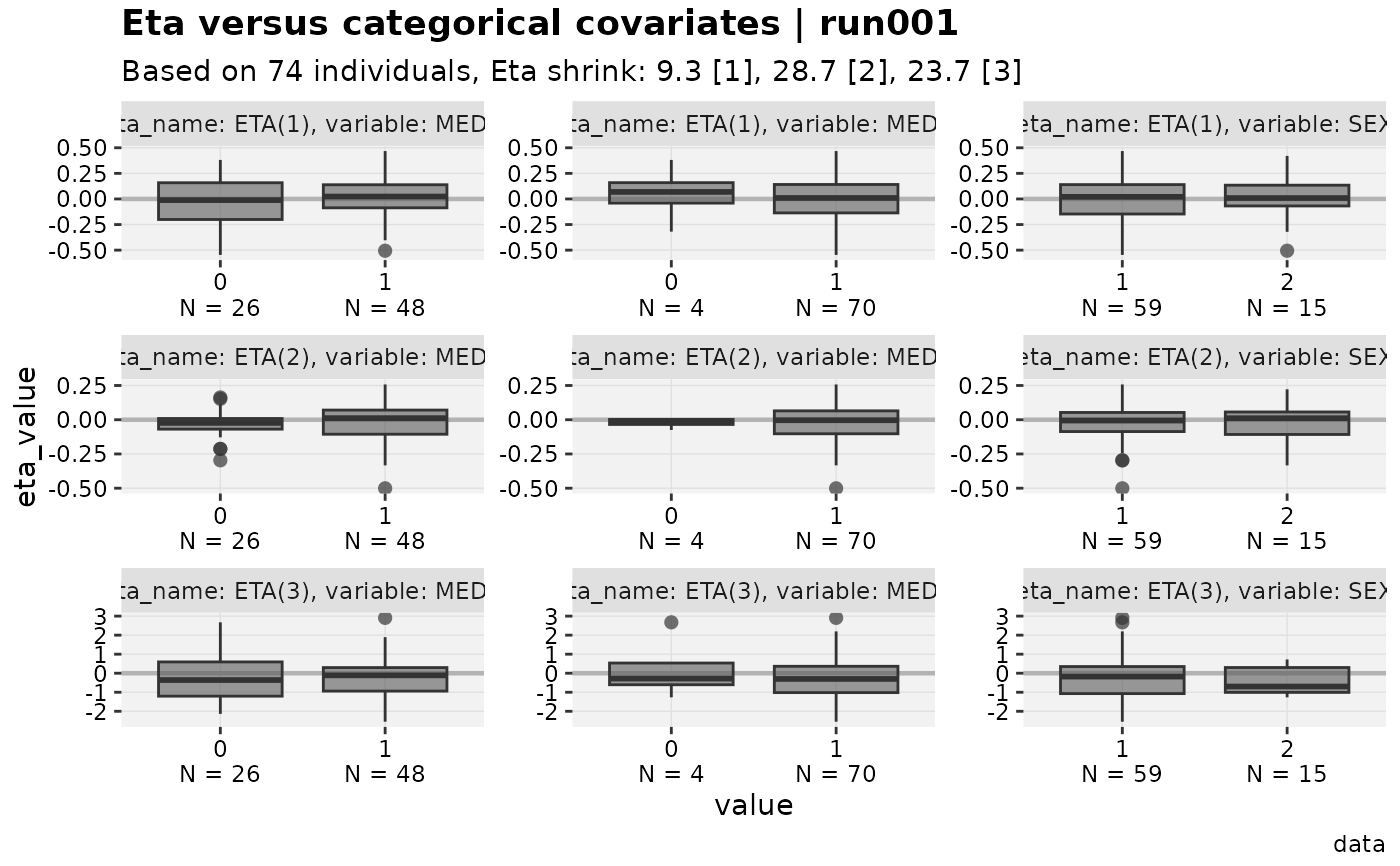
logical> Only relevant whenetavarresolves to more than one eta. IfTRUE(default, for backwards compatibility), returns a plain list of one plot per eta. IfFALSE, all etas are instead combined onto one shared plot – faceted by eta, in addition to the existing per-covariate facet – automatically paginating (at most 9 panels per page, i.e.ncol/nrowof 3) viaxpose's ownfacet_wrap_paginatemechanism. Printing the returned plot renders every page; passpagetoprint()to select a specific one.- title
Plot title
- subtitle
Plot subtitle
- caption
Plot caption
- tag
Plot tag
- facets
Additional facets
- .problem
Problem number
- quiet
Silence output
- ...
Any additional aesthetics.
Value
The desired plot, or (when etavar resolves to more than one
eta and list = TRUE) a plain list of one plot per eta.
Details
The ability to show number per covariate level is inspired
by the package pmplots, but is implements here within
the xpose ecosystem for consistency.
Examples
# \donttest{
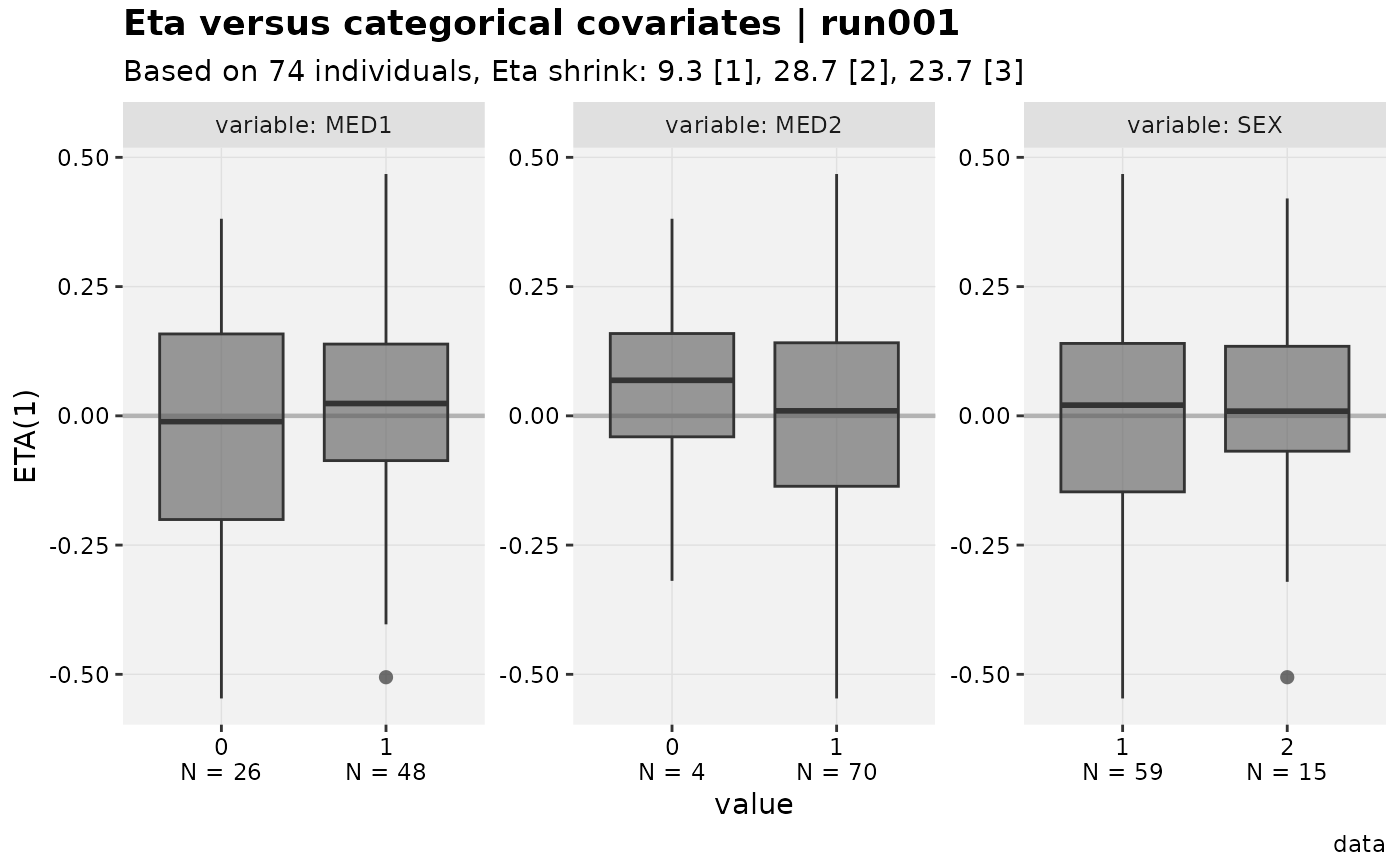
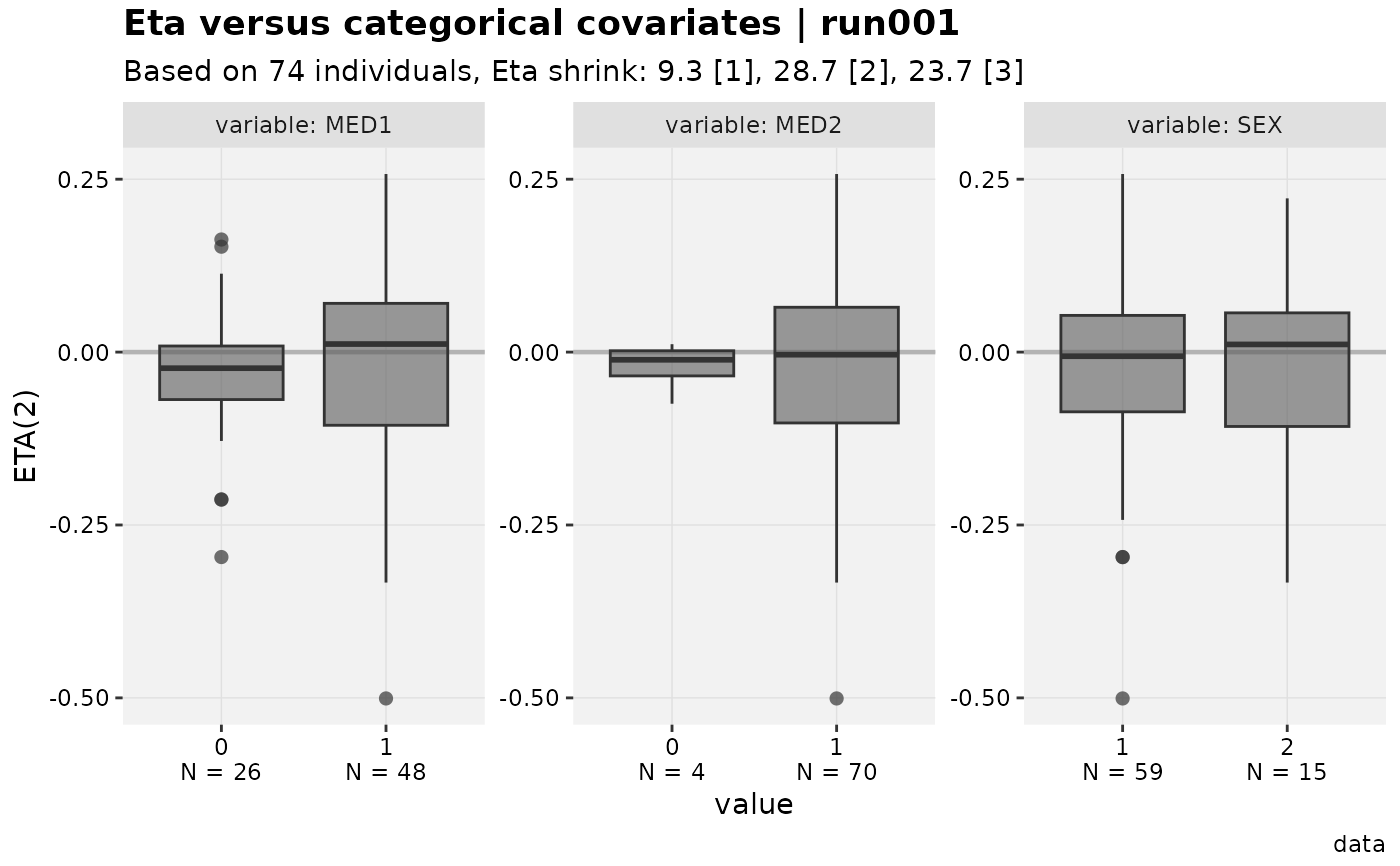
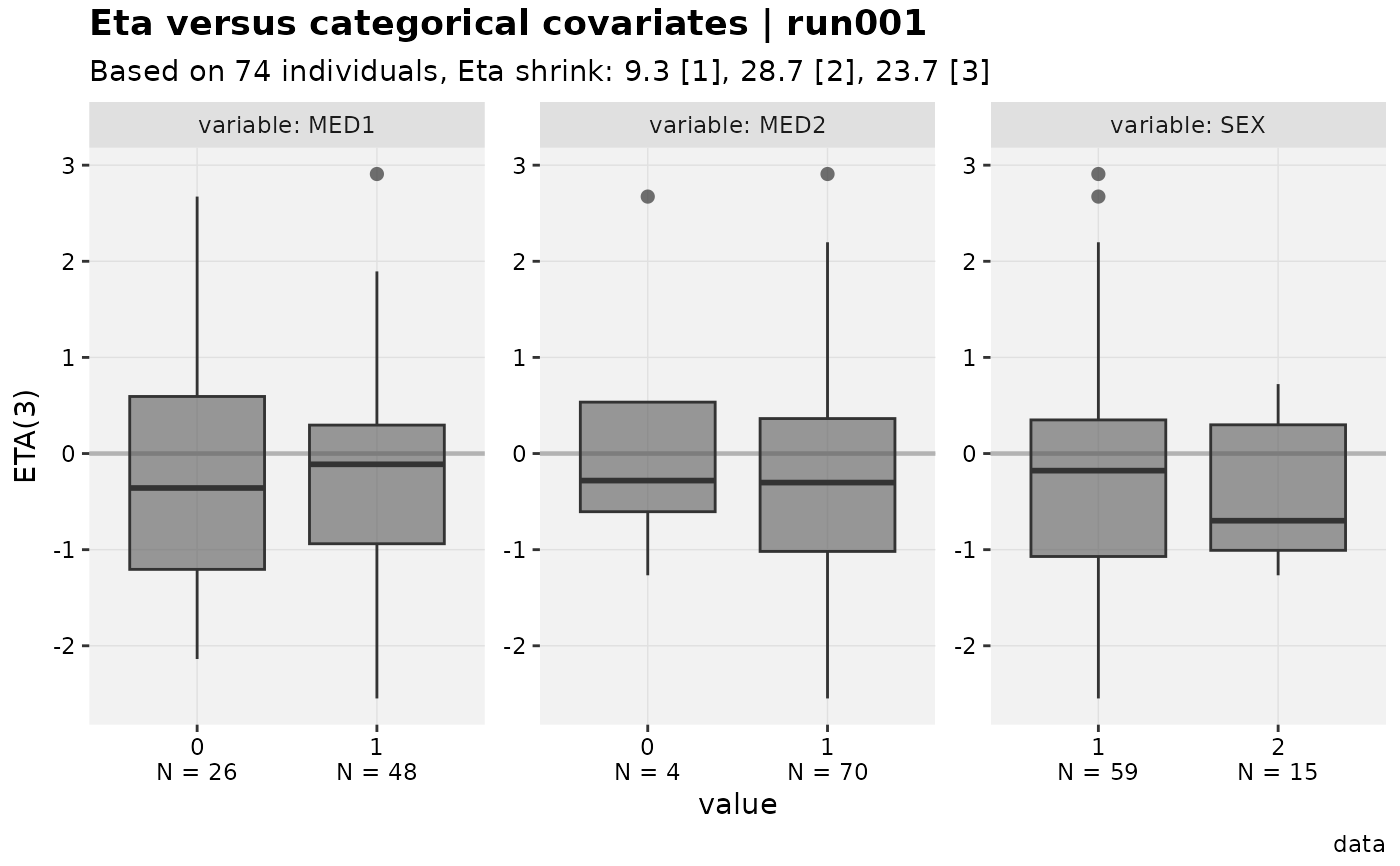
eta_vs_catcov(xpdb_x)
#> Using data from $prob no.1
#> Removing duplicated rows based on: ID
#> Tidying data by ID, DOSE, AMT, SS, II ... and 23 more variables
#> Warning: attributes are not identical across measure variables; they will be dropped
#> Using data from $prob no.1
#> Removing duplicated rows based on: ID
#> Tidying data by ID, DOSE, AMT, SS, II ... and 23 more variables
#> Warning: attributes are not identical across measure variables; they will be dropped
#> Using data from $prob no.1
#> Removing duplicated rows based on: ID
#> Tidying data by ID, DOSE, AMT, SS, II ... and 23 more variables
#> Warning: attributes are not identical across measure variables; they will be dropped
#> [[1]]
 #>
#> [[2]]
#>
#> [[2]]
 #>
#> [[3]]
#>
#> [[3]]
 #>
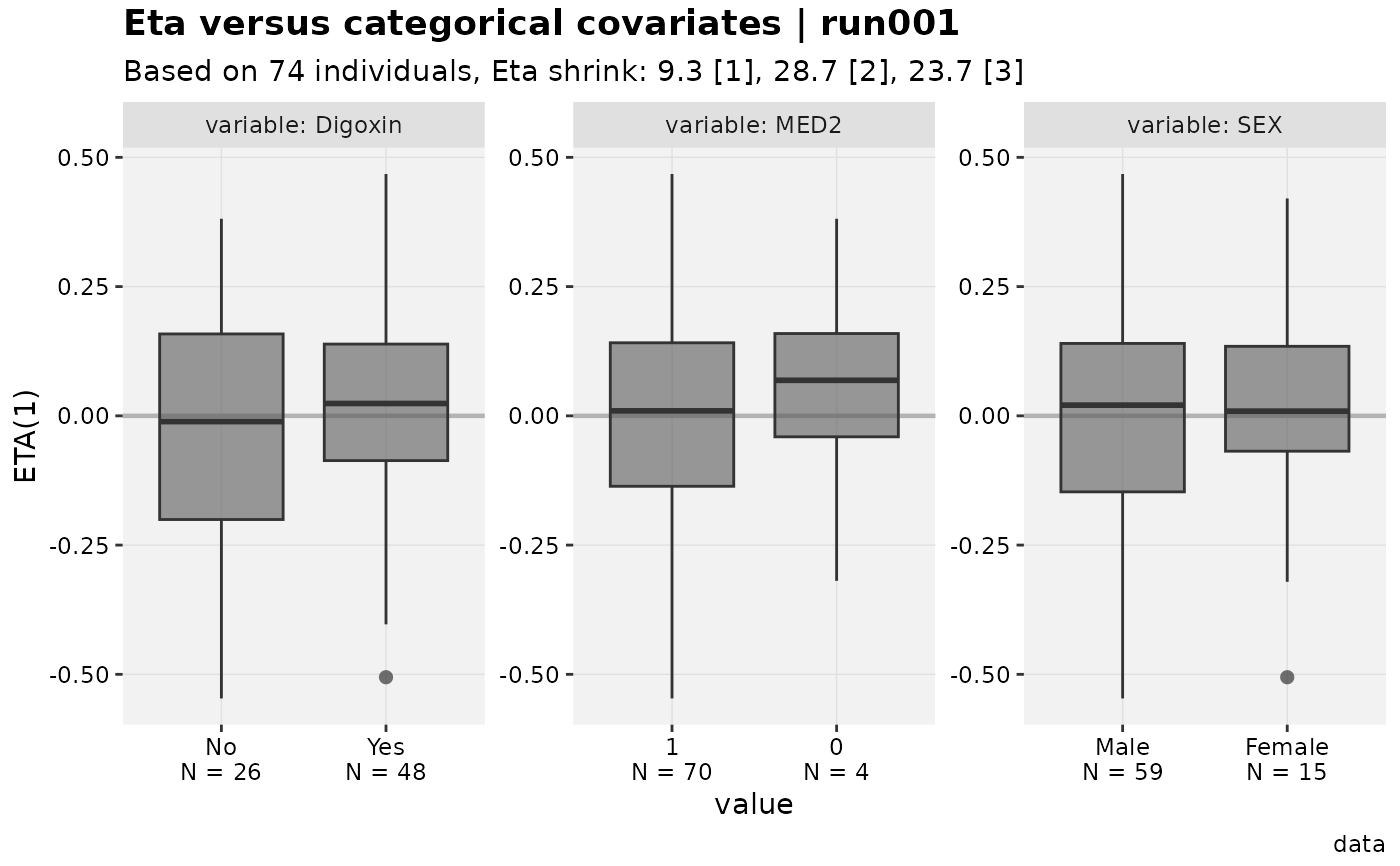
# Labels and units are also supported
xpdb_x %>%
xpose::set_var_labels(AGE="Age", MED1 = "Digoxin") %>%
xpose::set_var_units(AGE="yrs") %>%
set_var_levels(SEX=lvl_sex(), MED1 = lvl_bin()) %>%
eta_vs_catcov()
#> Warning: There was 1 warning in `dplyr::mutate()`.
#> ℹ In argument: `out = purrr::map_if(...)`.
#> Caused by warning:
#> ! In $prob no.2 columns: MED1 not present in the data.
#> Using data from $prob no.1
#> Removing duplicated rows based on: ID
#> Tidying data by ID, DOSE, AMT, SS, II ... and 23 more variables
#> Warning: attributes are not identical across measure variables; they will be dropped
#> Using data from $prob no.1
#> Removing duplicated rows based on: ID
#> Tidying data by ID, DOSE, AMT, SS, II ... and 23 more variables
#> Warning: attributes are not identical across measure variables; they will be dropped
#> Using data from $prob no.1
#> Removing duplicated rows based on: ID
#> Tidying data by ID, DOSE, AMT, SS, II ... and 23 more variables
#> Warning: attributes are not identical across measure variables; they will be dropped
#> [[1]]
#>
# Labels and units are also supported
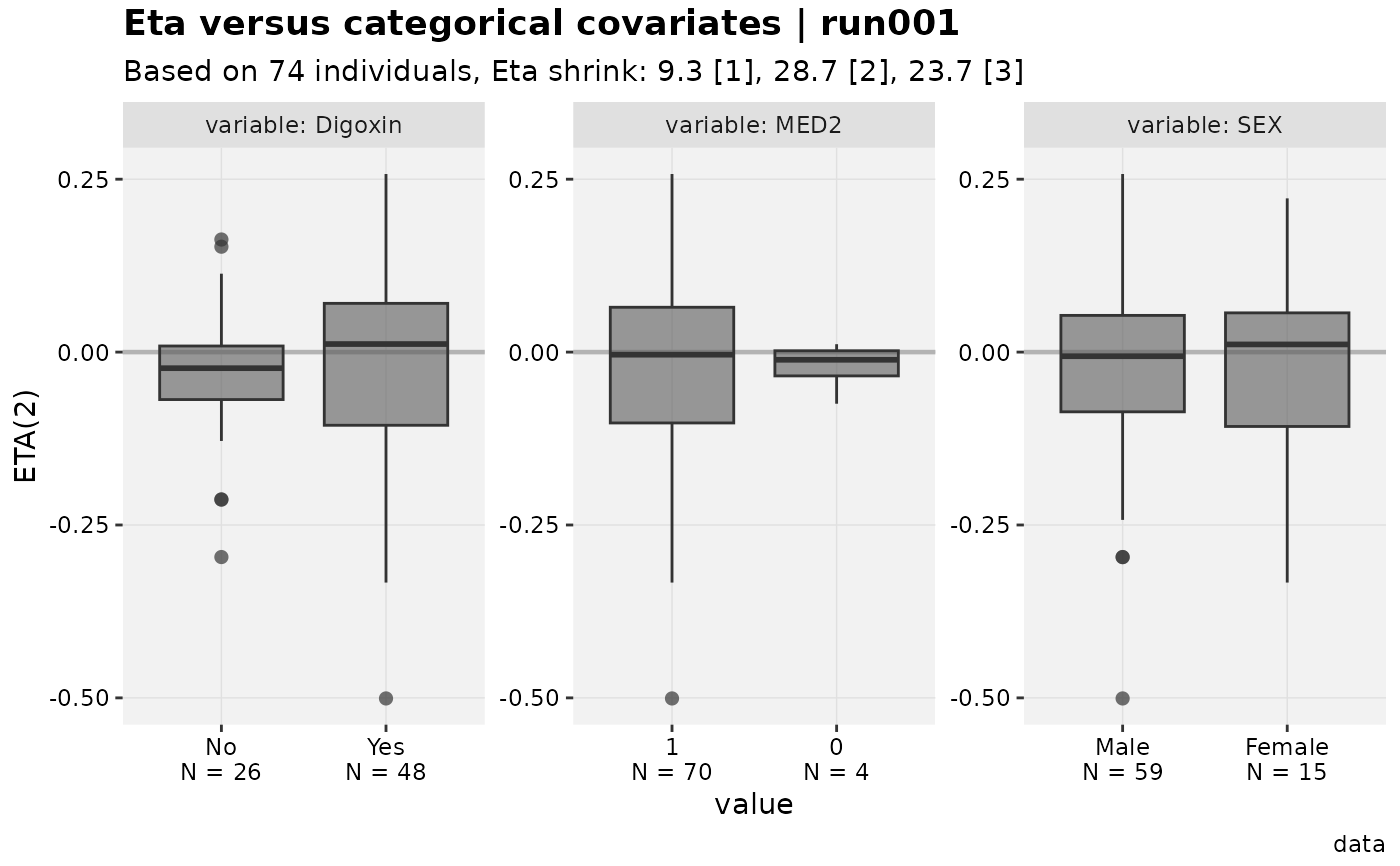
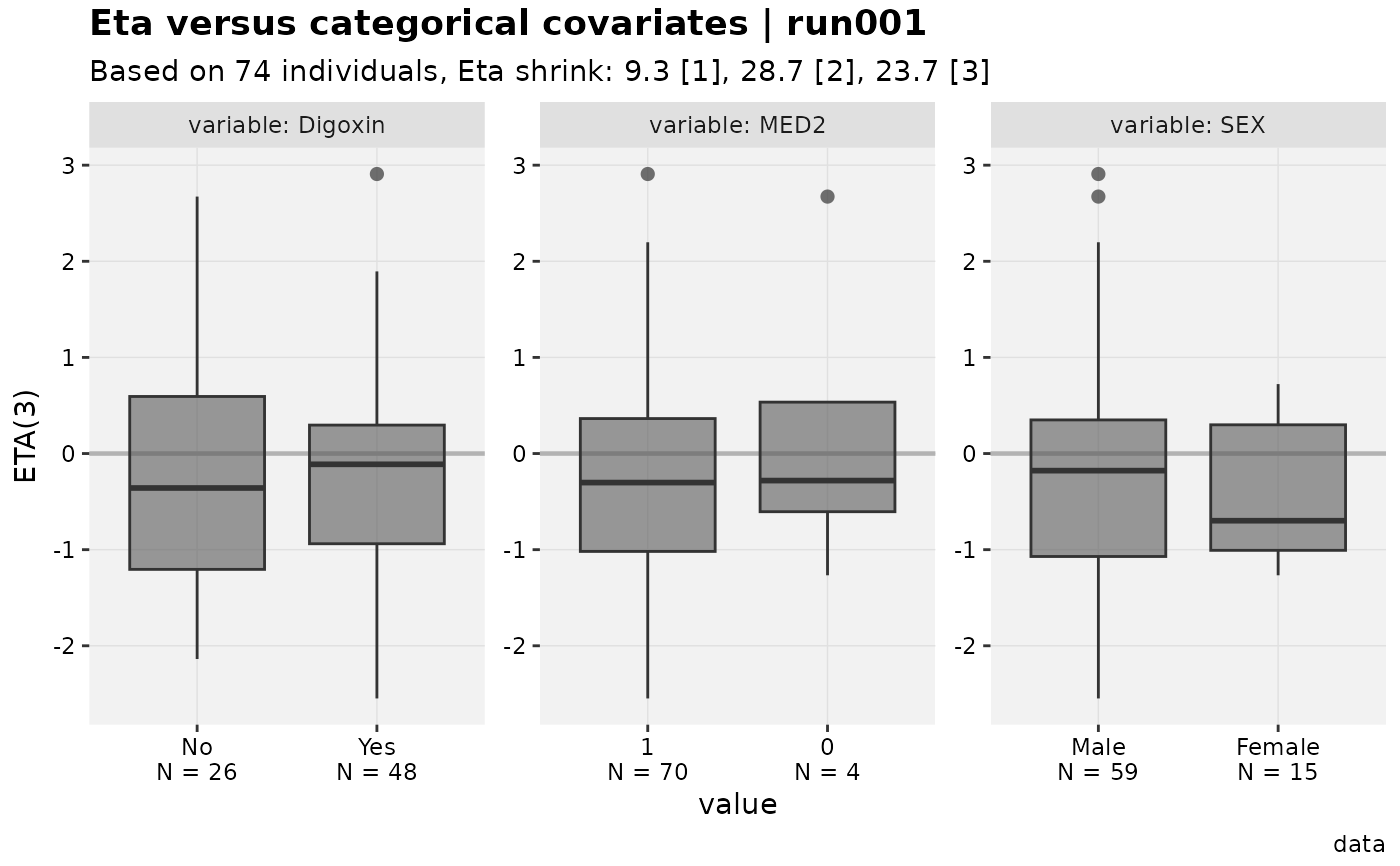
xpdb_x %>%
xpose::set_var_labels(AGE="Age", MED1 = "Digoxin") %>%
xpose::set_var_units(AGE="yrs") %>%
set_var_levels(SEX=lvl_sex(), MED1 = lvl_bin()) %>%
eta_vs_catcov()
#> Warning: There was 1 warning in `dplyr::mutate()`.
#> ℹ In argument: `out = purrr::map_if(...)`.
#> Caused by warning:
#> ! In $prob no.2 columns: MED1 not present in the data.
#> Using data from $prob no.1
#> Removing duplicated rows based on: ID
#> Tidying data by ID, DOSE, AMT, SS, II ... and 23 more variables
#> Warning: attributes are not identical across measure variables; they will be dropped
#> Using data from $prob no.1
#> Removing duplicated rows based on: ID
#> Tidying data by ID, DOSE, AMT, SS, II ... and 23 more variables
#> Warning: attributes are not identical across measure variables; they will be dropped
#> Using data from $prob no.1
#> Removing duplicated rows based on: ID
#> Tidying data by ID, DOSE, AMT, SS, II ... and 23 more variables
#> Warning: attributes are not identical across measure variables; they will be dropped
#> [[1]]
 #>
#> [[2]]
#>
#> [[2]]
 #>
#> [[3]]
#>
#> [[3]]
 #>
# Combine all etas onto one shared, faceted plot instead of a list
eta_vs_catcov(xpdb_x, list = FALSE)
#> Using data from $prob no.1
#> Removing duplicated rows based on: ID
#> Tidying data by ID, DOSE, AMT, SS, II ... and 23 more variables
#> Warning: attributes are not identical across measure variables; they will be dropped
#>
# Combine all etas onto one shared, faceted plot instead of a list
eta_vs_catcov(xpdb_x, list = FALSE)
#> Using data from $prob no.1
#> Removing duplicated rows based on: ID
#> Tidying data by ID, DOSE, AMT, SS, II ... and 23 more variables
#> Warning: attributes are not identical across measure variables; they will be dropped
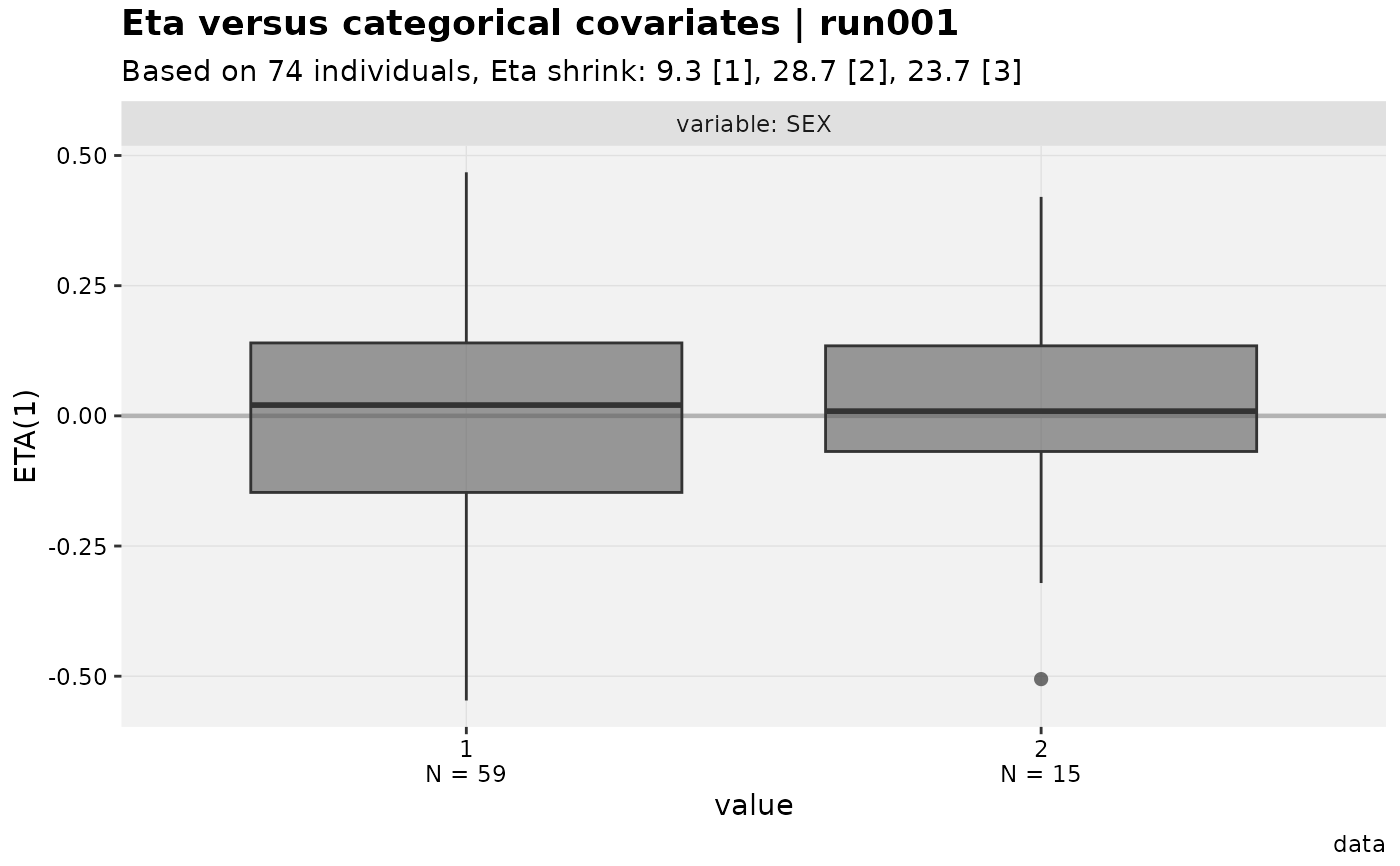
 # Restrict to specific covariates with covvar, just like etavar
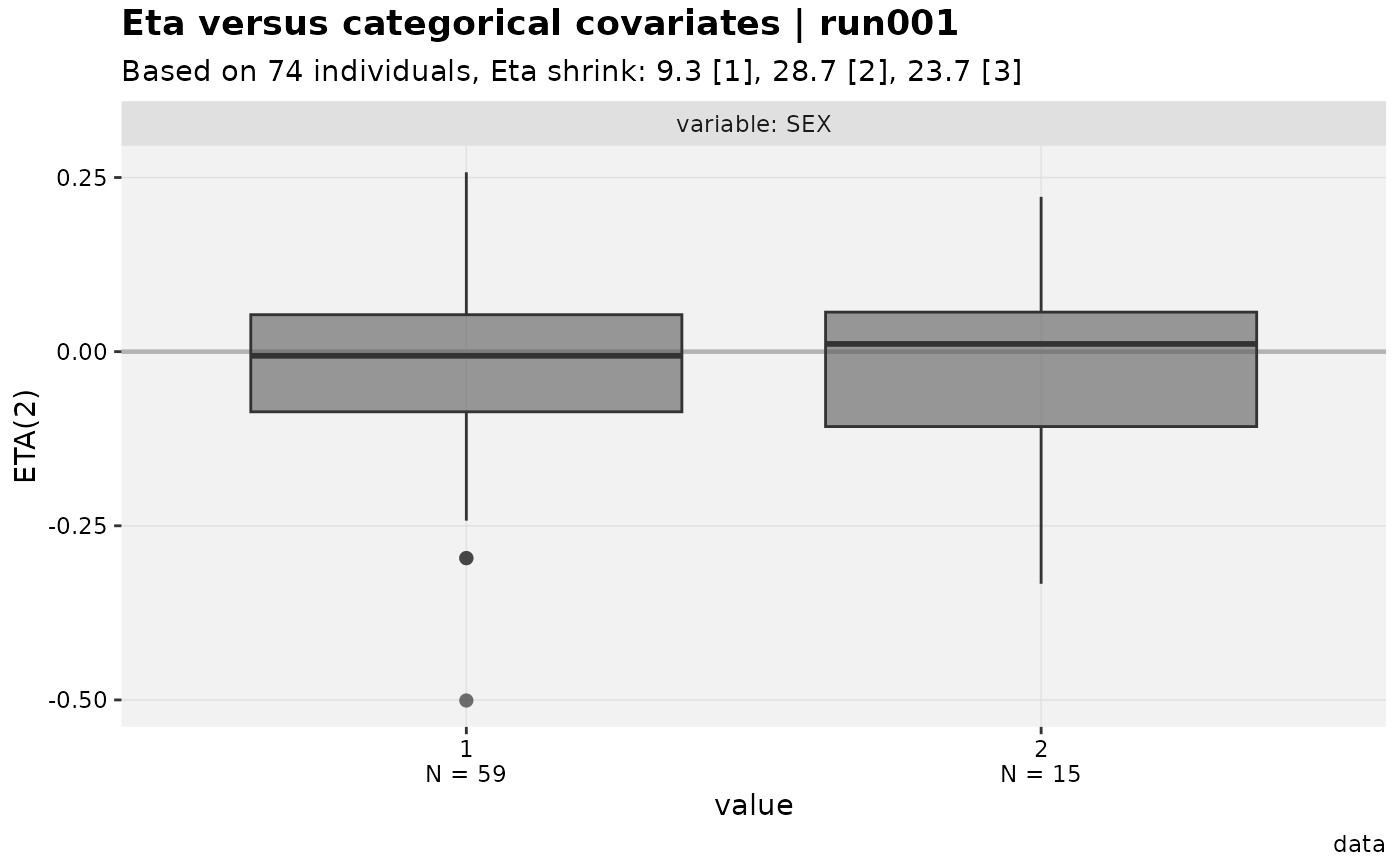
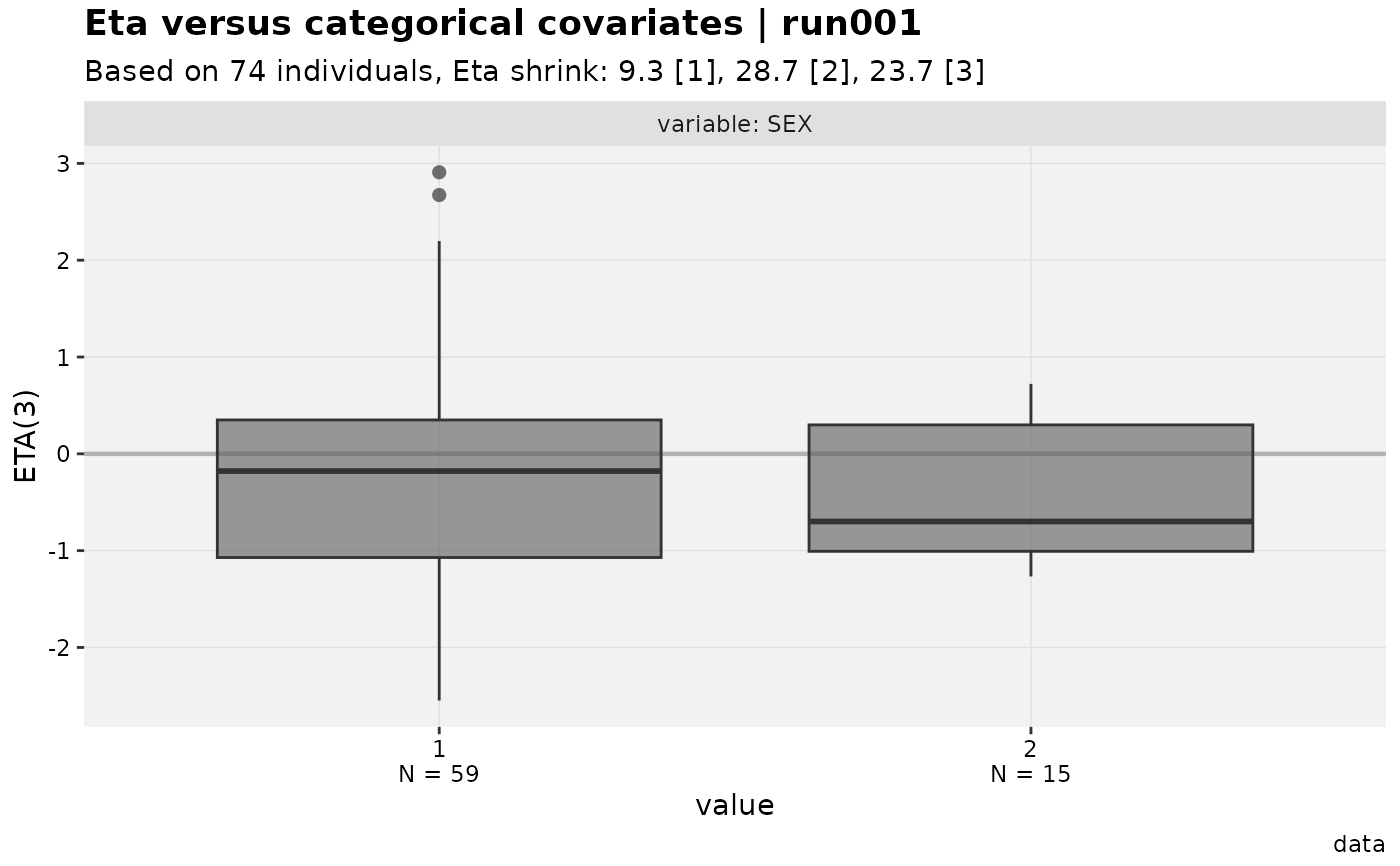
eta_vs_catcov(xpdb_x, covvar = SEX)
#> Using data from $prob no.1
#> Removing duplicated rows based on: ID
#> Tidying data by ID, MED1, MED2, DOSE, AMT ... and 25 more variables
#> Using data from $prob no.1
#> Removing duplicated rows based on: ID
#> Tidying data by ID, MED1, MED2, DOSE, AMT ... and 25 more variables
#> Using data from $prob no.1
#> Removing duplicated rows based on: ID
#> Tidying data by ID, MED1, MED2, DOSE, AMT ... and 25 more variables
#> [[1]]
# Restrict to specific covariates with covvar, just like etavar
eta_vs_catcov(xpdb_x, covvar = SEX)
#> Using data from $prob no.1
#> Removing duplicated rows based on: ID
#> Tidying data by ID, MED1, MED2, DOSE, AMT ... and 25 more variables
#> Using data from $prob no.1
#> Removing duplicated rows based on: ID
#> Tidying data by ID, MED1, MED2, DOSE, AMT ... and 25 more variables
#> Using data from $prob no.1
#> Removing duplicated rows based on: ID
#> Tidying data by ID, MED1, MED2, DOSE, AMT ... and 25 more variables
#> [[1]]
 #>
#> [[2]]
#>
#> [[2]]
 #>
#> [[3]]
#>
#> [[3]]
 #>
# }
#>
# }